


Measuring road safety in America’s metros: See how your region fares on five key factors, and levers for improvement
Improving roadway safety is an urgent priority. Crashes resulting in an injury or fatality reached 2.4 million in the U.S. in 2023. For those outside the vehicle, the dangers are even more stark. Pedestrian fatalities have been steadily rising since 2009. As MPOs work to improve road safety, it is essential to understand how usage contributes to crashes. This includes how much people drive; how fast vehicles go; and the prevalence of trucks.
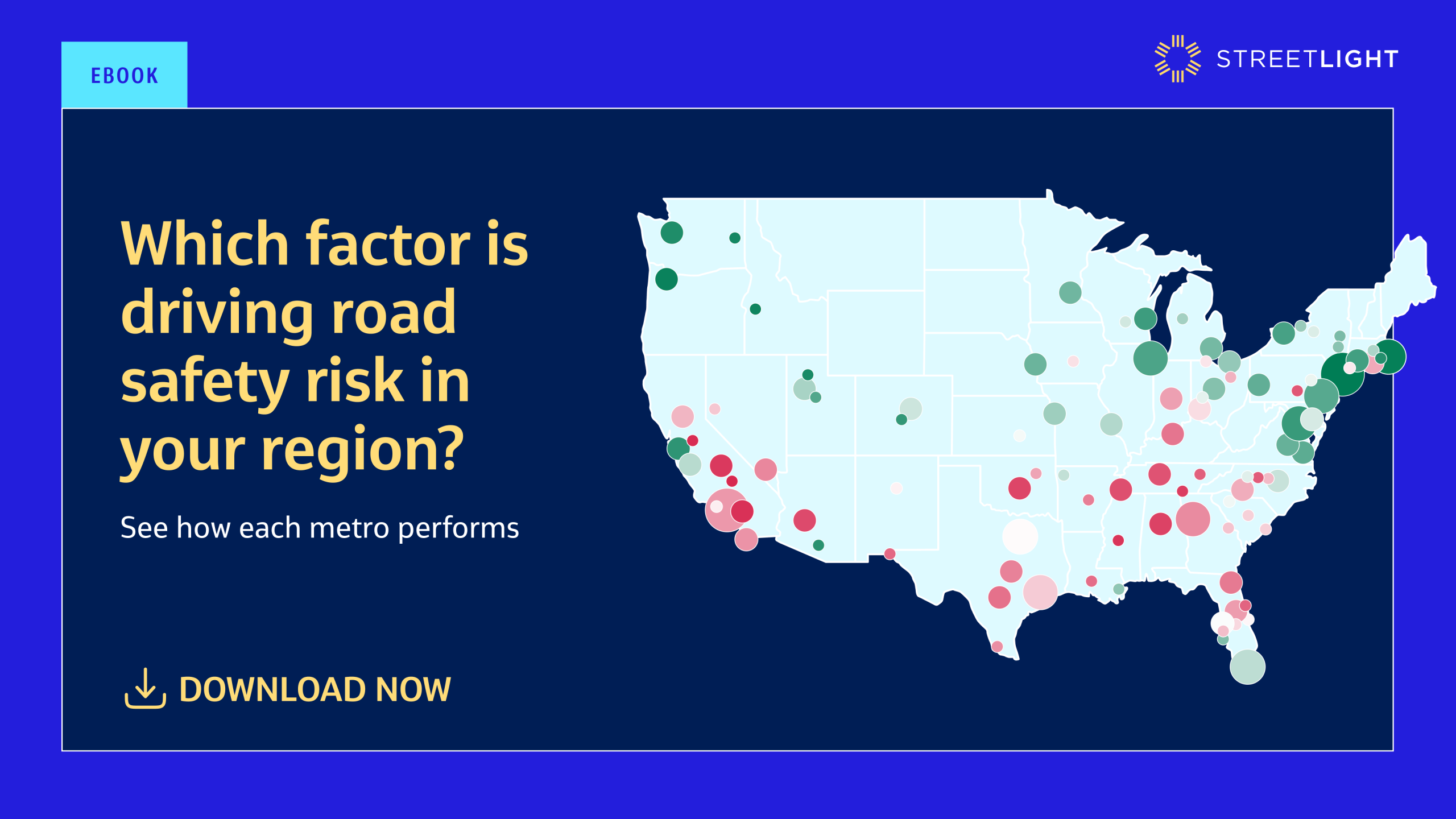
To uncover these risks, StreetLight’s data scientists measured five usage metrics in the 100 most populated metros to create the U.S. Safe Streets Index. The Index measures each metro’s performance on five factors:
- Vehicle Miles Traveled (VMT)
- Speed Differential
- Speed-based Pedestrian Risk
- Truck Activity
- Residential Speeding
Each metro shows areas of relative strength and weakness. For example, Portland, Oregon ranks as one of the strongest performers for roadway safety overall. But we can see that its biggest areas for potential improvement are speeds on pedestrian-heavy roads, as well as truck activity per capita. Each metro’s formula for safety improvement will be different. This report sheds light on the levers with the most potential.
To uncover how your region fares overall and by each of these factors, as well as the data-driven insights behind the findings, download the report here.

Comments are closed.